
Baby Play at 3–6 Months: Simple Tummy-Time and Connection Ideas
Discover easy, safe activities for 3–6 month babies: supervised tummy time, songs, reaching games and responsive play that follows your child’s cues.
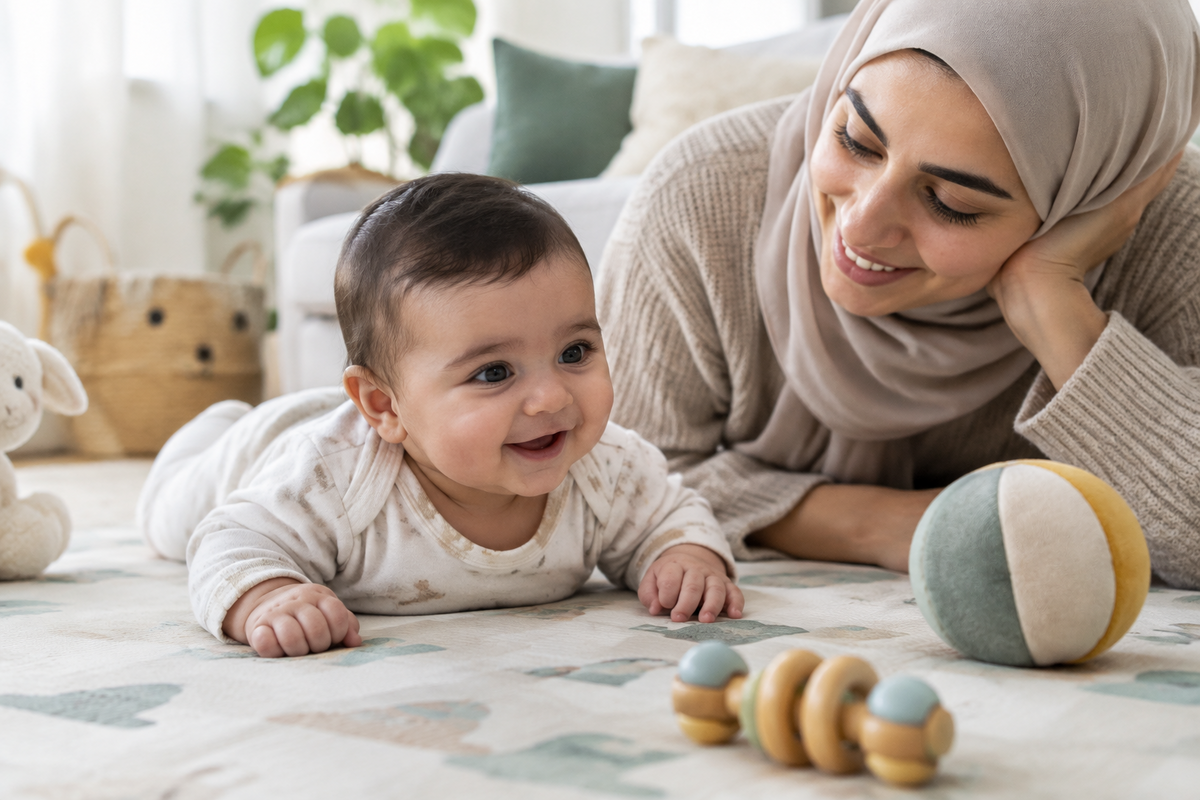
Quick answer: At 3–6 months, play can be simple and face-to-face: short supervised floor sessions while baby is awake, talking and singing, safe objects to look at or reach for, and breaks when baby shows tiredness. Tummy time is only for awake, closely supervised moments; sleep remains on the back.
Five ways to connect
- Try tummy time together. Get down at baby’s eye level on a clean, firm floor mat. Talk or smile; start with a brief comfortable session and repeat as tolerated.
- Follow a slow-moving toy. Move one age-appropriate object gently across baby’s view, leaving time to notice it. Keep small parts, cords and unsafe objects away.
- Copy sounds and expressions. Pause after coos, smile back and narrate daily routines. These easy back-and-forth moments build connection without special equipment.
- Offer a safe grasp. A lightweight infant rattle or cloth book can invite reaching. Stay within arm’s reach and supervise closely.
- Sing and read. Familiar songs, board books and your voice are enough. Repetition is welcome.
Follow the baby’s cues
Relaxed alertness, looking, reaching and vocalizing can be invitations to continue. Turning away, yawning, fussing or closing the eyes may mean it is time to pause. Pick baby up or change the activity. There is no need to meet a timer or compare progress with another child.
Safety and development
Supervise all awake play, never leave an infant alone on a raised surface, and place baby on their back for every sleep in a clear, firm, flat sleep space. Milestone lists describe what many children do by a certain age; they are not a diagnosis. Discuss any developmental concern with your child’s clinician.
Common questions
What if tummy time is difficult?
Try brief, positive moments when baby is calm and rested. Ask your pediatric clinician about options if baby was premature, has a medical condition, or you remain concerned.
Do I need special toys?
No. A caregiver’s face, voice and safe everyday interaction can be meaningful play.
General education only; not an individualized developmental assessment.
Sources
- CDC: Milestones and activities by 2 months
- American Academy of Pediatrics: Back to Sleep, Tummy to Play
أفكار لعب وتواصل للرضيع من 3 إلى 6 أشهر
الإجابة المختصرة: اجعلي اللعب بسيطًا وتفاعليًا: لحظات قصيرة على الأرض والطفل مستيقظ وتحت مراقبتك، مع الحديث والغناء وأشياء آمنة ينظر إليها أو يحاول الوصول إليها. أوقفي اللعب عندما يبدو متعبًا. وقت البطن للعب وهو مستيقظ فقط، أما النوم فعلى الظهر.
خمس أفكار سهلة
- استلقي أمامه على بساط نظيف وثابت، وتحدثي إليه خلال وقت البطن، وابدئي بلحظة قصيرة مريحة.
- حركي لعبة مناسبة للعمر ببطء ليلاحظها، وأبعدي القطع الصغيرة والحبال.
- قلدي أصواته وابتساماته، ثم اتركي له فرصة للرد؛ هذا التبادل البسيط يقوي التواصل.
- قدمي خشخيشة خفيفة أو كتابًا قماشيًا آمنًا مع مراقبة مباشرة.
- غني واقرئي له؛ صوتك والروتين المألوف يكفيان، ولا تحتاجين ألعابًا خاصة.
اتبعي إشاراته وحافظي على السلامة
النظر والمحاولة والأصوات قد تعني أنه مستمتع. الالتفات أو التثاؤب أو الانزعاج إشارة إلى استراحة. راقبي كل لعب وهو مستيقظ، ولا تتركيه على سطح مرتفع وحده، وضعيه على ظهره لكل نوم في مساحة ثابتة وفارغة. قوائم المهارات لا تشخّص الطفل؛ تحدثي مع طبيبه عن أي قلق.
معلومات تثقيفية عامة وليست تقييمًا طبيًا فرديًا.


